Vitamins · Supplements
Biotin vs B12: What's the Difference and Which One Do You Actually Need?
July 14, 2026 · 6 min read · The IV Hub Wellness
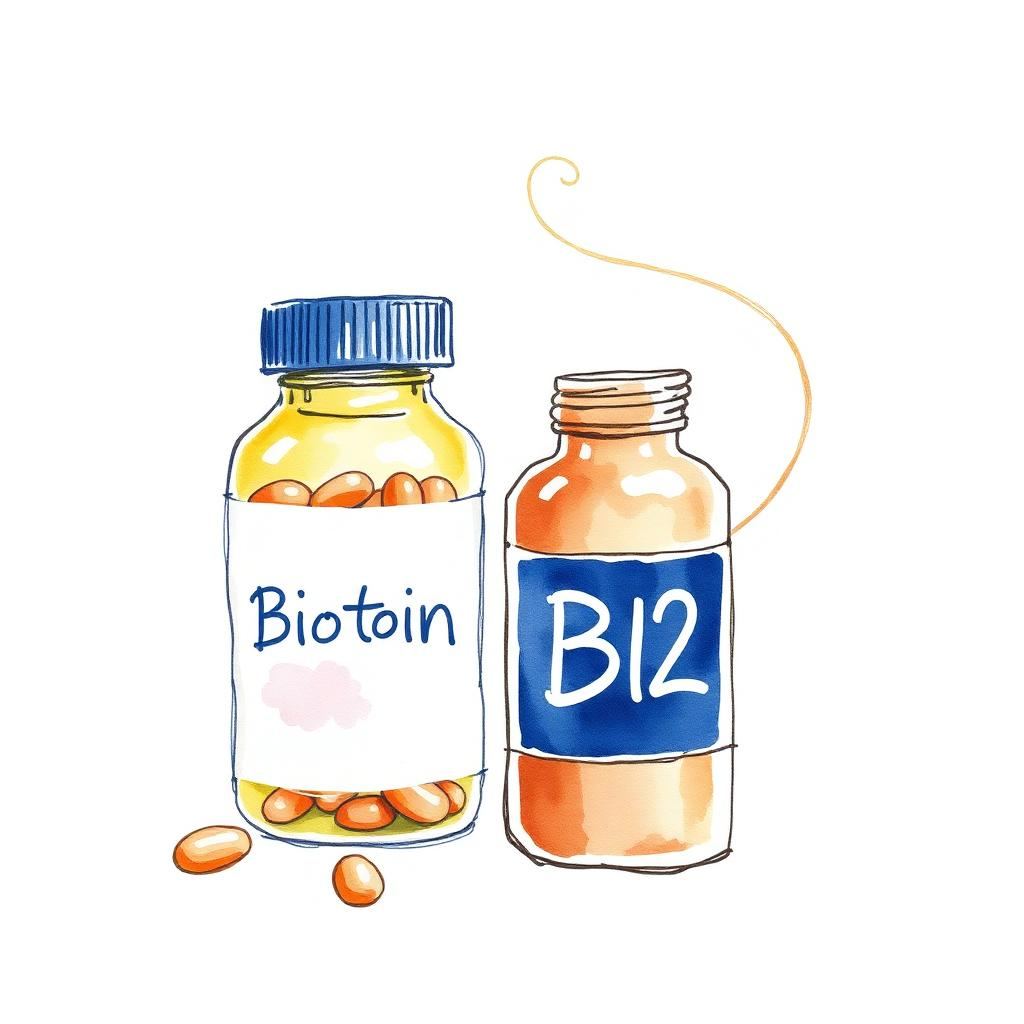
Walk down any supplement aisle and you will see biotin and B12 marketed for almost identical outcomes: more energy, healthier hair, better skin. Because both are B vitamins, most people assume they are basically interchangeable. They are not. Biotin and B12 have completely different jobs inside your cells, and taking the wrong one for your symptoms is a common reason people spend money on supplements that never move the needle.
What Biotin Actually Does
Biotin is vitamin B7. Its main role is to act as a cofactor for enzymes called carboxylases — the ones that help your body metabolize fats, carbohydrates, and protein into usable energy. It also feeds the keratin infrastructure that builds hair, skin, and nails. That is why biotin has become the flagship ingredient in "hair, skin, and nails" gummies.
True biotin deficiency is rare in adults because gut bacteria produce some biotin on their own, and it is present in eggs, salmon, seeds, and organ meats. When deficiency does occur, it usually shows up as thinning hair, brittle nails, a scaly rash around the mouth or eyes, or numbness in the extremities.
What B12 Actually Does
B12 is cobalamin. It is essential for red blood cell formation, DNA synthesis, and — critically — the myelin sheath that insulates every nerve in your body. Without enough B12, cells lose the ability to carry oxygen efficiently, nerves misfire, and cognition slows.
B12 deficiency is far more common than biotin deficiency, especially after age 50, in vegetarians and vegans, in anyone taking metformin or long-term acid blockers, and in patients with any gastrointestinal condition that affects absorption. Symptoms include persistent fatigue that sleep does not fix, tingling or numbness in the hands and feet, brain fog, mood shifts, and pale skin.
Biotin vs B12: The Quick Comparison
- Vitamin family: Biotin = B7. B12 = cobalamin.
- Primary role: Biotin builds keratin and metabolizes macronutrients. B12 builds red blood cells and protects nerves.
- Best known for: Biotin — hair, skin, and nails. B12 — energy, focus, and nerve health.
- Deficiency prevalence: Biotin is rarely deficient. B12 deficiency is common and often missed.
- Absorption: Biotin absorbs easily by mouth. B12 requires healthy stomach acid and intrinsic factor to absorb — many adults do not have both.
- Testing: Biotin levels are rarely checked. B12 is a routine blood test we recommend during any fatigue or neuropathy workup.
Which One Should You Take?
The honest answer is: it depends on what your body is actually lacking, and there is no way to know without testing. That is why we run micronutrient panels before recommending long-term supplementation. Guessing gets expensive.
That said, general guidance holds up:
- If your primary concerns are brittle nails, thinning hair, or dry skin, and your bloodwork is otherwise clean, a biotin-containing complex is reasonable — but hair loss usually has deeper drivers worth investigating.
- If your primary concerns are fatigue, brain fog, numbness, or mood changes, prioritize B12 testing before anything else. A single dose will not fix a real deficiency.
- If you have had gastric bypass, take metformin or acid blockers, follow a vegan diet, or are over 60, assume you are at higher risk for low B12 regardless of symptoms.
Why Injections and IVs Outperform Pills
B12 is the classic example of a vitamin where the delivery method matters more than the dose. Only a small percentage of oral B12 is absorbed, and less if your gut is inflamed or your stomach acid is low. Intramuscular B12 injections and IV formulations bypass the gut and deliver 100% of the dose to your bloodstream.
Our IV hydration drips — including the Beauty Drip, Myer's Cocktail, Immunity, and Recovery blends — combine B12 with biotin, other B vitamins, magnesium, vitamin C, and amino acids so you get a full spectrum, not just one nutrient in isolation.
The Bottom Line
Biotin and B12 are both essential, but they solve different problems. Biotin supports the structural proteins that keep hair, skin, and nails healthy. B12 keeps your energy, nerves, and brain running. If you are tired all the time, invest in B12 first. If you are seeing hair and nail changes with no fatigue, biotin makes more sense — but consider whether a hormone, thyroid, or micronutrient panel might tell you a bigger story.
Recommended IV Options
Ready to put this into practice? These are the treatments our clinical team most often pairs with this topic.
Vitamin Injections
B12, MIC, Vitamin D, glutathione and more — fast, targeted delivery without the pill bottle.
Learn more →IV Hydration Therapy
Custom drips for energy, immunity, recovery, hydration, and beauty — delivered directly to your bloodstream.
Learn more →Micronutrient Testing
See exactly which vitamins, minerals, and antioxidants your body is missing — no more guessing.
Learn more →