Hormone Health
Estrogen vs. Testosterone: What Each Hormone Does and How Balance Is Restored
July 29, 2026 · 8 min read · Medically reviewed by Noreen Connolly, PhD, NP
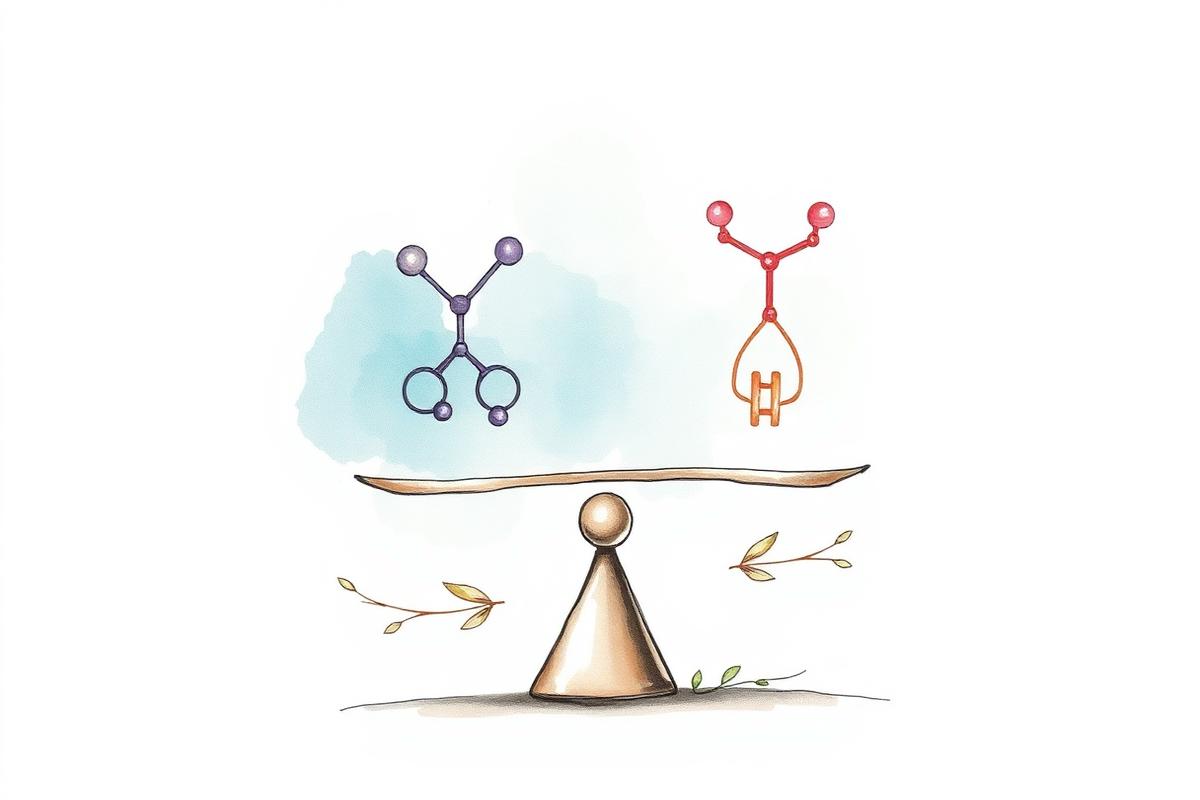
Quick answer: Estrogen and testosterone are not male and female opposites. They sit on the same steroid pathway, and every body needs both. Estrogen protects bone, blood vessels, skin, and mood; testosterone drives muscle, libido, drive, and red blood cell production. Symptoms appear when the ratio between them drifts — and the fix is lab-guided replacement, not guesswork.
Same Pathway, Different Jobs
Both hormones begin as cholesterol. The body converts it through pregnenolone and progesterone into androgens, and an enzyme called aromatase converts a portion of testosterone into estradiol — the most active form of estrogen. That single conversion step is why the two hormones can never be considered in isolation. Change one and you change the other.
In women, the ovaries produce most estradiol and a meaningful share of testosterone, with the adrenal glands contributing DHEA that converts downstream. In men, the testes produce testosterone and aromatase supplies the estradiol men need for bone, brain, and vascular health. The organs differ; the chemistry does not.
What Estrogen Actually Does
- Bone density. Estrogen restrains osteoclasts, the cells that break down bone. Its decline at menopause is the single largest driver of accelerated bone loss.
- Vascular health. It supports nitric oxide production and healthy endothelial function.
- Skin and collagen. Skin loses roughly 30% of its collagen in the first five years after menopause.
- Thermoregulation. Falling estradiol destabilizes the hypothalamic set point — the mechanism behind hot flashes and night sweats.
- Mood and cognition. Estradiol modulates serotonin and dopamine signaling, which is why perimenopause so often brings anxiety, irritability, and word-finding trouble.
What Testosterone Actually Does
- Lean muscle. It is the primary signal for muscle protein synthesis in both sexes.
- Libido and drive. In women as much as in men, testosterone — not estrogen — is the dominant libido hormone.
- Red blood cells. It stimulates erythropoiesis, which is why hematocrit is monitored on therapy.
- Bone strength. Partly direct, partly through conversion to estradiol.
- Metabolic health. Low testosterone tracks with insulin resistance and visceral fat accumulation.
Symptoms of Imbalance — and Why They Overlap
Fatigue, weight gain, poor sleep, low libido, and brain fog show up whether the problem is low estradiol, low testosterone, an unfavorable ratio between them, hypothyroidism, low ferritin, or poor sleep hygiene. That overlap is exactly why symptom-only prescribing fails. A full panel — total and free testosterone, estradiol, SHBG, LH, FSH, DHEA-S, thyroid, CBC, ferritin, fasting insulin, and vitamin D — separates the causes. Our Diagnostic Blueprint labs and micronutrient testing exist for that reason.
The Ratio Matters More Than Either Number
A man with a "good" total testosterone who aromatizes heavily can feel worse than a man with a lower number and balanced estradiol: puffiness, moodiness, and soft erections despite a reassuring lab value. A woman on estradiol alone may resolve hot flashes yet still report zero libido and no return of muscle tone — the missing piece is almost always testosterone. Balance, not maximization, is the clinical goal.
How Balance Is Restored: BHRT vs. TRT
BHRT uses hormones structurally identical to your own — typically estradiol, progesterone, and testosterone — delivered by cream, pellet, patch, or injection and titrated to physiologic levels. It is the standard approach for perimenopausal and menopausal symptoms, and increasingly for men who want estradiol managed alongside androgens.
TRT replaces testosterone specifically in people with documented low levels and matching symptoms. Done properly it includes estradiol monitoring, hematocrit checks, and periodic reassessment — not a fixed dose forever.
For patients whose main complaints are recovery, sleep, and body composition rather than classic hormone deficiency, sermorelin peptide therapy can be a complementary path, and medical weight loss often improves hormone numbers on its own, since adipose tissue is itself an aromatase-rich organ.
A Realistic Timeline
Weeks 1–4: sleep and mood typically shift first. Weeks 4–8: libido, energy, and mental clarity. Months 3–6: body composition, strength, skin quality, and bone markers. We recheck labs at six to eight weeks, adjust dose, then move to quarterly and eventually semiannual monitoring.
The Bottom Line
Estrogen and testosterone are partners, not rivals. Feeling well depends on having enough of both in the right proportion for your age, sex, and goals — confirmed on paper, not assumed from symptoms. If the list above sounds like your last two years, start with labs and a conversation.
Recommended IV Options
Ready to put this into practice? These are the treatments our clinical team most often pairs with this topic.
Bio-Identical Hormone Therapy
Rebalance estrogen, progesterone, and testosterone to address fatigue, weight, mood, and libido.
Learn more →Testosterone Therapy (TRT)
Medically supervised TRT for energy, mood, muscle mass, and sexual health.
Learn more →Diagnostic Blueprint Labs
Comprehensive lab panels that map your baseline and guide precise treatment decisions.
Learn more →